
I have seen construction projects lose time because teams relied on outdated drawings, rough measurements, or incomplete site details. That is why LiDAR in Construction: A Beginner’s Guide matters for modern contractors.
LiDAR helps teams capture accurate 3D data before design errors, field clashes, and rework become expensive. Instead of guessing what exists on a site, teams can scan it, study the point cloud, connect the data with BIM, and make faster decisions.
What Is LiDAR in Construction?
LiDAR stands for Light Detection and Ranging. It uses laser pulses to measure distance between a scanner and nearby surfaces. These measurements create a detailed 3D record of buildings, land, utilities, structural elements, equipment, and site conditions.
The main output is a point cloud, which is a collection of measured points that show the real size, shape, and position of visible objects. In simple terms, LiDAR turns a physical jobsite into reliable digital data.
How LiDAR Works on a Jobsite
A scanner sends laser beams toward surrounding objects and records how long each beam takes to return. The system calculates distance and builds a 3D view of the space. Teams may use a tripod scanner, drone LiDAR, mobile mapping system, or handheld scanner.
After the scan, the data is processed and aligned. The final model can support surveying, design review, scan-to-BIM, quality control, progress tracking, and as-built documentation.
Why Point Clouds Matter
Point clouds reduce guesswork. On renovation, retrofit, infrastructure, and commercial projects, small measurement errors can create major field problems. A point cloud helps teams compare planned designs with real conditions before crews install materials.
It also improves coordination because project managers, designers, engineers, and trade contractors can view the same reality-based model instead of debating different drawings or field notes.
Main Types of LiDAR Used in Construction
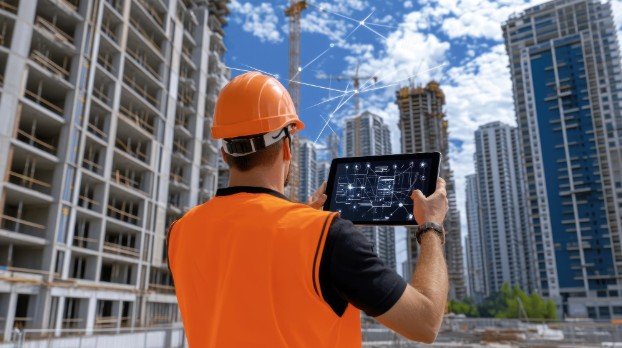
Terrestrial LiDAR scanners are placed on tripods and are useful for buildings, interiors, facades, plants, and detailed as-built models. Drone-based LiDAR works well for large sites, roadwork, land development, terrain mapping, stockpile measurement, and hard-to-reach areas.
Mobile LiDAR systems are useful for roads, tunnels, corridors, campuses, and large facilities, while handheld scanners help with tight spaces and quick interior documentation.
Top Uses of LiDAR in Construction
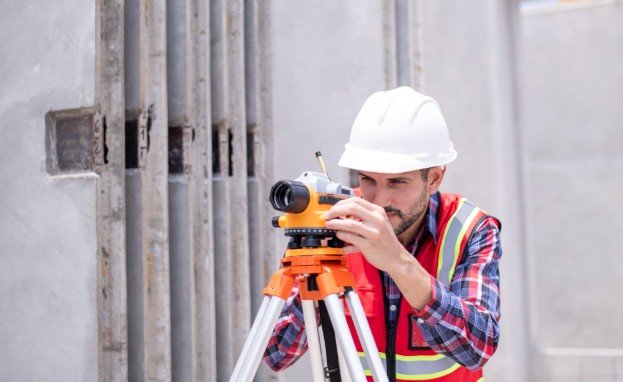
LiDAR is widely used for site surveying and topographic mapping. It helps teams understand slopes, surfaces, access points, existing structures, and terrain before construction starts.
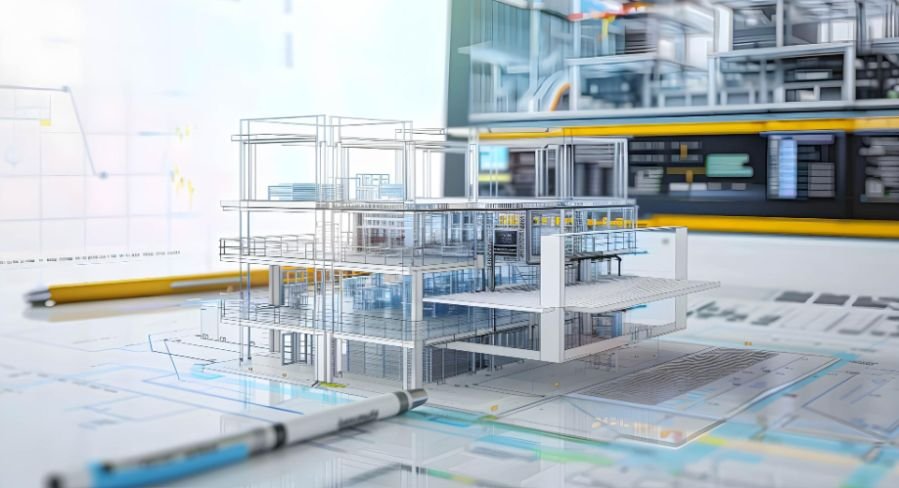
It is also valuable for scan-to-BIM. Scanned data can be converted into BIM models so architects, engineers, and contractors can coordinate designs around real conditions. This is especially useful for renovations, additions, industrial buildings, schools, and commercial projects.
Another major use is MEP coordination. Mechanical, electrical, and plumbing systems often compete for limited space. LiDAR helps identify layout conflicts before installation begins.
Progress tracking is another strong use case. By scanning a site at different stages, teams can compare completed work with the model, schedule, or drawings. This supports quality checks, payment documentation, issue tracking, and accountability.
For me, the practical value of LiDAR in Construction: A Beginner’s Guide is that it shows how one technology can support planning, safety, design, documentation, and final handover.
Benefits of LiDAR for Contractors
The biggest benefit is accuracy. LiDAR captures detailed site information that helps reduce missed measurements, design mistakes, and rework. It also saves time because large areas can be scanned faster than many traditional field methods.
LiDAR can improve safety by helping teams collect data from roofs, slopes, traffic zones, industrial areas, unstable spaces, and restricted locations with less direct exposure. It also improves communication because a 3D scan is often easier to understand than a flat drawing.
LiDAR vs Traditional Surveying
Traditional surveying is still important, but LiDAR captures more detail in many situations. A surveyor may collect selected points, while LiDAR captures millions of points across visible surfaces. This makes it useful when a project needs a detailed record of existing conditions.
The best results often come when surveyors and construction teams use LiDAR as part of a broader workflow instead of treating it as a full replacement for expertise.
LiDAR vs Photogrammetry
Photogrammetry uses photos to create 3D models. LiDAR uses laser measurements. Photogrammetry can be affordable and visually rich, but LiDAR is usually stronger when accuracy, complex geometry, vegetation, or difficult lighting conditions matter.
The right choice depends on project size, site conditions, budget, accuracy needs, and final deliverable.
When Contractors Should Use LiDAR
Contractors should consider LiDAR when a project has complex existing conditions, tight coordination needs, large site areas, high rework risk, or strict as-built requirements. It may not be needed for very small jobs where manual measurements are enough.
The goal is not to use advanced technology everywhere, but to use the right tool when accuracy and visibility matter, which is why laser scanning in construction can be valuable for complex projects that demand precise measurements and better site documentation.
Future of LiDAR in Construction
LiDAR is becoming more connected with BIM, drones, robotics, digital twins, and project management software. As tools become easier to use, more contractors will rely on reality capture to plan better, reduce errors, and document work with confidence.
Frequently Asked Questions
1. What is LiDAR in construction used for?
It is used for site surveying, point clouds, BIM modeling, progress tracking, quality checks, safety planning, and as-built documentation.
2. Is LiDAR better than manual measuring?
LiDAR is better for complex or large sites because it captures more detail faster, but simple jobs may still only need manual measurements.
3. What is LiDAR in Construction: A Beginner’s Guide about?
It explains how LiDAR works, where contractors use it, what benefits it offers, and when it makes sense for a project.
4. Can small contractors use LiDAR?
Yes, small contractors can use LiDAR through scanning service providers, handheld tools, mobile scanners, or drone-based scanning partners.
Final Takeaways
I believe LiDAR is becoming one of the most practical tools for better construction planning. It helps teams see real site conditions, coordinate work earlier, reduce rework, improve safety, and create stronger project records. When contractors use it with a clear purpose, LiDAR becomes more than a scanning tool. It becomes a smarter way to build with fewer surprises.